

Specialized JennAir Appliance Repair in San Francisco
Mon–Sat: 8:00 AM – 7:00 PM
Learn what a small gap at the oven door may look like, which checks are appropriate from outside the appliance, and how to decide whether professional diagnosis is needed.
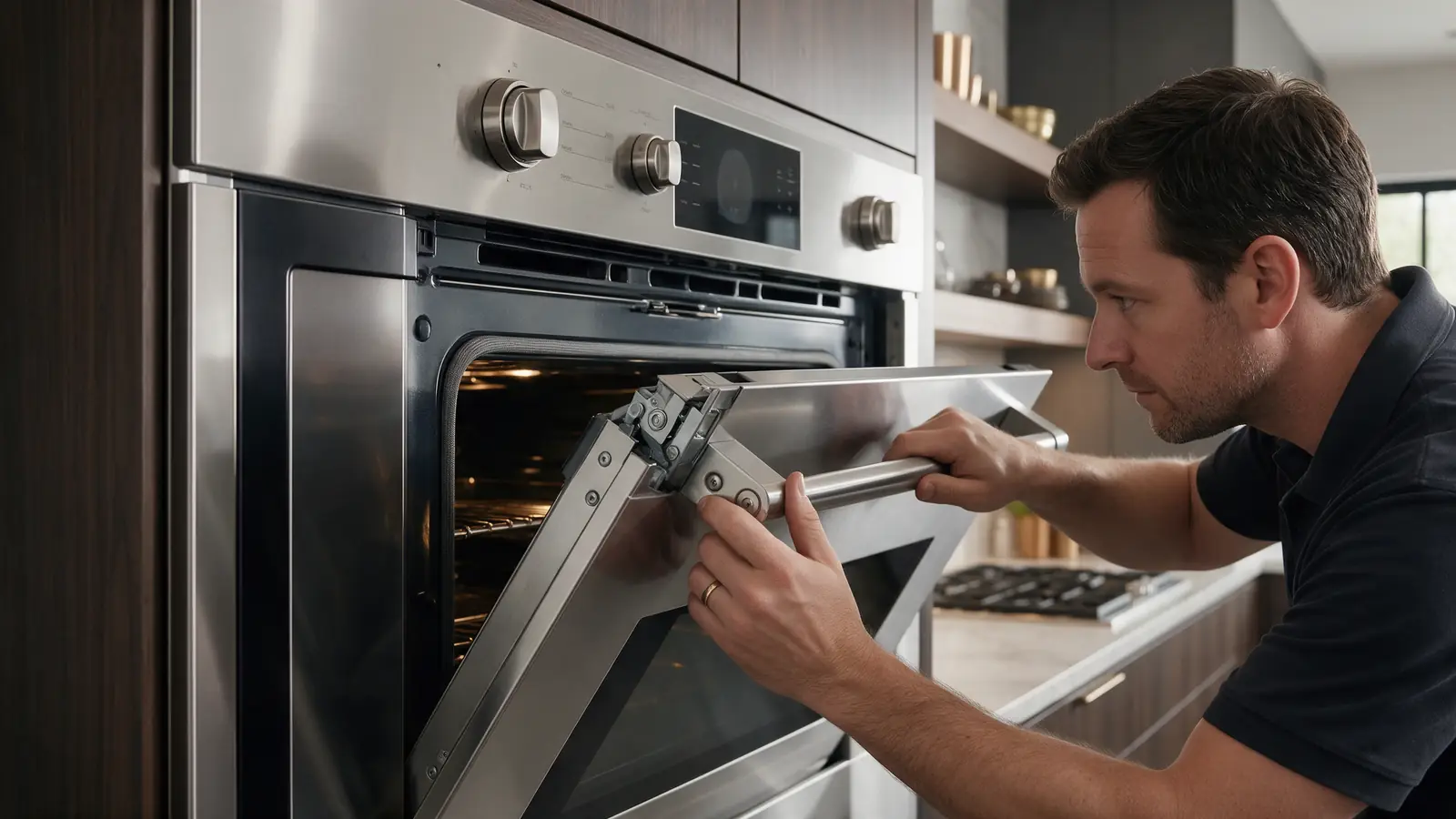
The complaint usually starts with something ordinary: heat escaping near one corner of the door. In a wall oven installed at counter height, the change can seem minor until it happens repeatedly. Treat the visible symptom as a description of behavior, not proof that a particular part has failed. Several conditions can lead to similar results, especially where the appliance is built into cabinets and used throughout the day. The useful first question is what is different from the last period of normal use, rather than which replacement component to order.
Timing gives a small gap at the oven door some context. A change immediately after loading, cooking, cleaning, or adjusting controls may have a different explanation from a problem that developed gradually over several weeks. Watch for interruptions, unusual sounds, or a message on the display without assuming that two events share one cause. The same symptom may be brief and harmless in one operating mode and a reason to arrange diagnosis in another.
Write down the observation in plain language before trying a setting change. Include where on the appliance it occurred, which controls were selected, and whether another section still works normally. That record preserves details that are easily forgotten after a cycle finishes. It also distinguishes a small gap at the oven door from a separate, unrelated complaint, helping avoid unnecessary repair assumptions.
An appliance in a wall oven installed at counter height works within a real kitchen, not a laboratory. Cabinet openings, nearby heat, room traffic, dishes or food placement, and available clearance can all influence how a symptom looks. That does not mean the installation is automatically at fault. It means that a technician needs to understand the surroundings before interpreting heat escaping near one corner of the door. Photographing the appliance in its normal position is often more useful than moving surrounding fittings.
Usage patterns matter in this particular case. Think about whether the behavior occurs during a heavily loaded cycle, immediately after a door is opened, only when certain settings are chosen, or throughout normal operation. Avoid changing many variables at once. A single adjustment followed by a normal observation period can provide clearer evidence than a sequence of resets and improvised tests.
If the unit is behind panels or beneath a counter, resist pulling it out to investigate. Built-in equipment can involve electrical, water, gas, or ventilation connections that should not be disturbed casually. Keep your notes limited to visible conditions and controls a homeowner is expected to operate. Document any recent cabinet work or cleaning only if it genuinely preceded the complaint.
A sensible first check is to check for visible crumbs or cookware interfering with closure. Do this only through normal user-accessible controls and parts, following the instructions for the exact appliance. Look for obvious loading interference, selected modes, and accessible indicators before drawing conclusions. If any check would involve moving fixed equipment, opening a panel, accessing wiring, or handling internal gas components, stop and leave that work to a qualified technician.
Next, watch the door movement without applying force. Use a consistent starting point so observations can be compared. For example, keep a similar load and avoid switching several settings between attempts. The goal is not to force the appliance through repeated cycles. It is to identify whether a normal user action changes what you see. Where water leaks, unsafe food temperatures, gas odors, or damaged surfaces are involved, waiting for another experiment may be inappropriate.
One boundary is especially important for a small gap at the oven door: stop using the oven if the door will not close securely. A homeowner should not need tools to carry out the basic checks described here. If the controls, filter, or accessible door area cannot be checked without dismantling equipment, note that limitation rather than improvising a repair.
For a useful service description, note the precise symptom, when it appeared, and whether the appliance finishes its selected operation. If a display message appears, copy it exactly, including letters, numbers, and punctuation. Photograph the display before it disappears. Do not substitute a code from a different JennAir family; a sequence can have a different interpretation on another product.
Capture changes that relate specifically to heat escaping near one corner of the door. Did the behavior happen before or after the normal cycle? Does it affect one zone, shelf, setting, or door, or the entire appliance? Did the symptom begin after a control adjustment or a change in loading? These are not definitive diagnostic tests, but they help separate a broad performance issue from a repeatable malfunction.
The appliance label and user manual can clarify the relevant instructions. Record the exact model number from an accessible label without removing installed panels. If that label is difficult to reach safely, the number may be available in purchase paperwork. Exact model information helps narrow compatible parts and service procedures once the underlying problem has actually been identified.
When a small gap at the oven door continues, an on-site assessment should first reproduce or review the described behavior. The technician can distinguish an operating setting, environmental influence, installation condition, and internal component fault without assuming the outcome in advance. The work may require manufacturer-specific service information for the model involved, especially where electronic controls coordinate several functions.
During that assessment, the sequence matters: a symptom, an observed condition, a supported test, and only then a repair proposal. This order avoids presenting a replacement part as the explanation for heat escaping near one corner of the door merely because similar appliances sometimes need one. A written estimate should identify the recommended work after the diagnosis rather than before any evaluation has taken place.
If the conclusion is unclear, ask what evidence connects the proposed work to the observed symptom. A clear explanation should address hinges or seals appear damaged or misaligned, including whether the condition is repeatable and what alternatives were considered. Approval belongs to the customer, and no repair should proceed before that approval is given.
Consider the inconvenience and risk of continued use, rather than how dramatic the symptom sounds. A small change in performance may justify scheduling a routine visit; active leaking, damaged electrical surfaces, unsafe temperatures, or a suspected gas issue calls for a more cautious response. In this case the warning to remember is straightforward: stop using the oven if the door will not close securely. Choose the safer option whenever the condition is uncertain.
If the problem persists after reasonable outside checks, avoid repeated cycles intended to make it disappear temporarily. Record what happens and arrange an inspection in the San Francisco Bay Area. Ask for confirmation of the visit window and a written estimate before work begins. That process leaves room to consider the cabinet installation and the exact JennAir model rather than treating a small gap at the oven door as a generic household repair.
Once the appliance is back in ordinary use, keep an eye on the original observation instead of introducing new tests. A stable result under familiar conditions is easier to judge than one produced by constant setting changes. For related care guidance, see the appliance care articles or explore service scheduling when the same behavior returns.
Start with normal controls and accessible parts: check for visible crumbs or cookware interfering with closure. If the appliance appears unsafe, stop using it and seek professional help rather than running additional tests.
Not necessarily. The observation alone does not identify a faulty component. Operating conditions, installation, settings, and internal defects can produce overlapping symptoms. Diagnosis should establish the cause before recommending parts.
Request an assessment if hinges or seals appear damaged or misaligned. Keep a record of the behavior and exact model information so the technician can evaluate the appliance in its installed setting.
Share a few details and we’ll confirm an appointment. Prefer to talk? Call us and we’ll help right away.