JennAir F1-1 Error Code: Meaning and Checks
A message reading F1-1 should be recorded exactly as it appears on the JennAir control. For a JennAir range, the manufacturer's documentation identifies F1-1 as Possible oven temperature sensor, contr

Specialized JennAir Appliance Repair in San Francisco
Mon–Sat: 8:00 AM – 7:00 PM
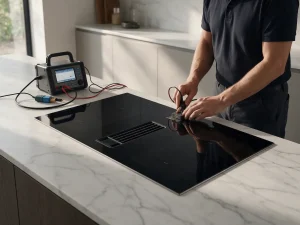
The JennAir JPIFC736RM is a induction cooktop model listed in the existing catalog. Use this guide to organize symptoms, check accessible conditions, and understand a diagnosis-first visit.

The JPIFC736RM is listed in the JennAir model catalog as a induction cooktop. When a homeowner reports one zone refusing to heat, pan detection, and unexpected zone cycling, the first question is which function has actually changed. The visible symptom may be clear, but it rarely establishes the failed part on its own. For this reference, compare the behavior of separate cooking zones using suitable cookware. This makes the service conversation more precise without claiming that the symptom occurs on every example of the model.
Keep a short timeline of when the behavior began, whether it is constant, and what the unit was doing immediately beforehand. Record any exact message on the display and take a photograph before changing a setting. It is helpful to distinguish an intermittent interruption from a complete loss of operation. Check the model number on the accessible product label and copy every letter and number. A similar-looking suffix can change the parts and instructions used during a repair visit.
Induction heating requires compatible cookware and intact sensing and control systems. A pan that works on one zone can provide useful context, but it is not a component test. An indicator light can show a cooking setting or stored heat rather than a malfunction, depending on the controls fitted to the appliance. Check accessible settings and make sure ordinary user-cleanable areas are not obstructed, but do not remove protective panels. If the circuit breaker is already tripped, avoid repeated attempts to restore operation. You can observe how the issue behaves, yet internal electrical, gas, or cooling measurements are professional work.
For this induction cooktop, the surrounding installation matters: the countertop cutout and ventilation below the induction surface. Tell the technician whether decorative panels, tight clearances, stairs, or building access rules affect the route to the appliance. Built-in units should not be pulled forward before a planned inspection. Even a seemingly simple symptom can require attention to finish protection and safe access before testing begins.
A technician first compares the reported behavior with the actual operation of the JPIFC736RM. A clear diagnostic path checks related systems before recommending a replacement part. The written estimate should explain the proposed work and be presented before any repair begins. You can accept or decline it; nothing proceeds without approval. The goal is to resolve the observed fault rather than replace parts because another product had a similar symptom.
Cracked glass or evidence of electrical damage is a reason to stop operating the surface, not to run another heating trial. If you see sparks, smoke, repeated protection trips, visible water near electrical areas, or damage that makes operation unsafe, stop using the product. Document what happened from a safe distance. Avoid work on gas lines, electrical wiring, sealed refrigerant circuits, and other protected components. A service visit can address those risks with the correct instructions for the model.
Bring together the JPIFC736RM identification, your short symptom notes, and any display photos. Mention whether the issue follows a recent outage, cleaning, installation change, or unusual operating condition, but do not guess which component is defective. If more than one function is affected, explain the order in which changes appeared. That sequence may help narrow the on-site inspection without turning a general model page into an unsupported technical diagnosis.
Write down the exact symptom, any display text, and when it occurs. Keep the model number visible in a photo and note whether the problem affects one function or several.
Yes. Leave built-in installations in place and explain access restrictions before the visit. A technician can plan safe inspection and determine whether further access is required.
No. A symptom can arise from different conditions. A diagnosis comes before any parts recommendation, followed by a written estimate and customer approval.
Model-information disclaimer. Confirm your exact model number and specifications with your appliance documentation before booking a repair. Model pages are for identification and compatibility reference.
A message reading F1-1 should be recorded exactly as it appears on the JennAir control. For a JennAir range, the manufacturer's documentation identifies F1-1 as Possible oven temperature sensor, contr
Before interpreting F1-8, identify the JennAir appliance and its full model number. For a JennAir range, the manufacturer's documentation identifies F1-8 as Possible oven control, user interface, keyp
When F1E4 appears, capture a photo of the display so similar letters and digits are not confused. For a JennAir over-the-range microwave, the manufacturer's documentation identifies F1E4 as Possible a
Learn how to describe cooktop symptoms, identify the correct model, and prepare for an inspection without opening appliance panels or guessing parts.
A practical repair reference for the JennAir JBRFR30IGX, focusing on uneven cooling, door sealing, and unwanted frost and preparation for an in-home…
A practical repair reference for the JennAir JBRFR36IGX, focusing on temperature drift, abnormal fan sounds, and defrost symptoms and preparation for an…
A practical repair reference for the JennAir JBWFNR24RX, focusing on warm beverages, condensation, and frequent cycling and preparation for an in-home inspection.
A practical repair reference for the JennAir JDS1450ML, focusing on standing water, poor washing, and interrupted cycles and preparation for an in-home…
A practical repair reference for the JennAir JDTS3924SM, focusing on drainage interruptions, leak warnings, and reduced cleaning and preparation for an in-home…
A practical repair reference for the JennAir JF36NXFXDE, focusing on cabinet temperature alarms, seal issues, and cooling instability and preparation for an…
A practical repair reference for the JennAir JFFCC72EHL, focusing on fresh-food warmth, freezer frost, and dispenser behavior and preparation for an in-home…
A practical repair reference for the JennAir JJW2424HM, focusing on failure to heat, door detection, and display faults and preparation for an…
A practical repair reference for the JennAir JOECC730RM, focusing on oven compartment heat, microwave-section operation, and electronic controls and preparation for an…
A practical repair reference for the JennAir JOEDC730RM, focusing on upper-versus-lower cavity heating, latching, and display behavior and preparation for an in-home…
A practical repair reference for the JennAir JOESC530RL, focusing on preheat delays, inaccurate baking, and keypad response and preparation for an in-home…
A practical repair reference for the JennAir JPIFC730RM, focusing on pan recognition, touch controls, and intermittent heating and preparation for an in-home…
A practical repair reference for the JennAir JPIGC748RM, focusing on clicking igniters, uneven burner flames, and loss of ignition and preparation for…
A practical repair reference for the JennAir JUDFP242HM, focusing on drawer temperature variation, moisture, and closure problems and preparation for an in-home…
A practical repair reference for the JennAir JXD7036YS, focusing on poor capture, fan noise, and controls that fail to respond and preparation…
Share a few details and we’ll confirm an appointment. Prefer to talk? Call us and we’ll help right away.