Range Hoods
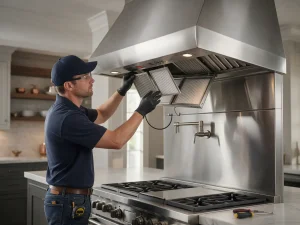
Learn how to describe range hood symptoms, identify the correct model, and prepare for an inspection without opening appliance panels or guessing…

Specialized JennAir Appliance Repair in San Francisco
Mon–Sat: 8:00 AM – 7:00 PM
Use this guide to understand common JennAir range hood problems and prepare useful details for a careful in-home diagnosis around San Francisco.
A JennAir range hood problem often begins with one visible change rather than a complete breakdown. People may notice weak ventilation, an unusually loud fan, a light that flickers, a blower that will not change speed, and visible grease accumulation. Those observations help define the conditions to inspect. A written description of the sequence is especially useful when the appliance functions normally during part of a visit. No symptom alone establishes which component needs attention.
The same complaint can come from several different conditions. For range hoods, a technician considers the operating mode, how the appliance is installed, and the difference between the reported symptom and what happens during inspection. Built-in installation can restrict access to connectors or service panels. The aim is to identify an actual fault before recommending parts, not to rely on a generic list of replacements.
Before arranging service, limit any checks to accessible surfaces and ordinary controls: removable accessible filters, control settings, visible outlet obstructions, and lighting controls. Note what you see without taking the appliance apart. Stop the check if you encounter exposed wiring, damaged insulation, unusual heat, smoke, or a smell suggesting an unsafe condition. Internal testing belongs with a service professional who has the correct technical information for the unit.
Many San Francisco Bay Area kitchens include wall-mounted, under-cabinet, and integrated ventilation above cooking equipment. Record the appliance position, what surrounds it, and whether the installer left any obvious access limitations. A panel-ready front can disguise the unit within the cabinetry. It is not necessary to remove a cabinet panel or move heavy equipment in advance. A clear description of the physical setting is enough to plan an orderly visit.
Some observations call for turning the unit off rather than continuing a cycle. For example, cooking vapor lingering in the room, airflow diminishing, a rattling blower, or lights refusing to switch on may warrant a pause while the circumstances are assessed. Visible leaks near electrical parts, smoke, sparking, or a gas odor require immediate attention using appropriate emergency precautions. Continuing to operate a distressed appliance can conceal the pattern of a problem and add damage.
JennAir has offered different configurations within the range hood family. Their controls, component layouts, and service information may not be interchangeable. Read the full model number from the accessible label and copy it precisely, including any suffix. A photograph of the label can be helpful. Do not assume that a model found in an online search shares the same parts as the unit in your kitchen.
The first step is a diagnosis based on actual operation and the reported history. Where the fault involves blower motors, switches, concealed duct connections, and wiring, repair decisions depend on what is found rather than on the symptom alone. Before work begins, the customer receives a written estimate. No repair proceeds without approval. Following service, the relevant function should be checked under appropriate operating conditions.
Gather the displayed message, if any, the time the issue first appeared, and the operating conditions immediately before it happened. If a feature works intermittently, note whether the behavior changes with settings or use. For a range hood, include any recent change in location, cabinetry, ventilation, or routine maintenance. Keep the area around the appliance reasonably accessible, but do not disconnect gas connections or open service panels.
A service call is most efficient when it begins with facts instead of a requested replacement part. For a JennAir range hood, even a familiar symptom may have more than one contributing cause. Diagnosis comes before a parts recommendation, and any estimate should describe the proposed work clearly. Homeowners can then decide whether to proceed based on the condition found, the work described, and their own priorities.
Ventilation complaints benefit from separating fan speed, noise and visible grease buildup. Note whether each selectable speed changes the airflow, whether vibration begins only at higher settings, and whether removable filters are seated. Clean accessible filters according to the care guide rather than reaching into the blower housing. Duct routing and concealed electrical connections require assessment by a qualified service professional.
Write down what the range hood does, when it occurs, and whether the behavior is consistent. A brief sequence of observations is more useful than guessing which part might have failed.
Leave built-in equipment in place. Note any doors, shelving, or furniture that may restrict normal access, and mention these details when the visit is arranged.
The appliance is examined before a repair is recommended. A written estimate is presented, and no repair work goes ahead without your approval.
Learn how to describe range hood symptoms, identify the correct model, and prepare for an inspection without opening appliance panels or guessing…
Learn how to describe cooktop symptoms, identify the correct model, and prepare for an inspection without opening appliance panels or guessing parts.
Learn how to describe dishwasher symptoms, identify the correct model, and prepare for an inspection without opening appliance panels or guessing parts.
Learn how to describe microwave symptoms, identify the correct model, and prepare for an inspection without opening appliance panels or guessing parts.
Learn how to describe range symptoms, identify the correct model, and prepare for an inspection without opening appliance panels or guessing parts.
Learn how to describe rangetop symptoms, identify the correct model, and prepare for an inspection without opening appliance panels or guessing parts.
Learn how to describe refrigerator symptoms, identify the correct model, and prepare for an inspection without opening appliance panels or guessing parts.
Learn how to describe wall oven symptoms, identify the correct model, and prepare for an inspection without opening appliance panels or guessing…
Share a few details and we’ll confirm an appointment. Prefer to talk? Call us and we’ll help right away.